
Couples Therapy in NYC
Couples Therapy in NYC
Having the same argument or missing how close you used to feel? We can help you talk through what’s happening and find ways to reconnect.
If you keep having the same argument or miss feeling close, we can help you understand what's happening between you. Together, we'll work on having conversations where you can both say what you mean and hear each other.
When It’s Hard to Reach Each Other…
You meant to talk about the dishes. Somehow you're both talking about whether the other person cares enough, and now you're having the same fight you had last week.
Or maybe you're barely arguing. You get through the week, make the plans, handle the logistics, and realize it's been weeks—if not months—since you felt close.
Virtual couples therapy for adults in NYC and throughout New York State.
The Same Argument Keeps Coming Back
The details change, but you can almost predict each other's next sentence. You both want to be understood, and you keep leaving the conversation feeling worse.
You're Trying to Make a Big Decision
Moving in, getting married, having children, or figuring out where to live can bring up differences you haven't had to face before.
You Miss Spending Time Together
There are work deadlines, friends to see, errands, and a subway ride between everything. By the time you're home together, you may have very little left to give.
What Would You Like to Talk About Together?
Couples come to therapy for many reasons. You may be hoping to work on some of these concerns:
Conversations that quickly become criticism, defensiveness, or silence.
One person wanting to talk while the other needs distance.
Feeling unheard or unsure how to ask for support.
Differences around intimacy, affection, or sex.
Resentment about money, household responsibilities, or time together.
Questions about commitment, marriage, or your future.
Navigating family expectations and boundaries.
The effect of anxiety, an eating disorder, or other mental health concerns on your relationship.
Our NYC couples therapists can help you work out where to start and what each of you hopes will change.
What Happens Between You When Things Get Hard?
One of you may push for an answer because waiting feels awful. The other may go quiet because the conversation feels overwhelming. Then the quiet makes the first person push harder, and neither of you feels understood.
We'll slow down those moments together. What did each of you hear? What were you afraid would happen? What did you need and have trouble saying?
We may explore experiences with past partners and family, what each of you learned about disagreement, and how work stress or major changes affect your relationship. We'll also talk about accountability and what each person is willing to practice between sessions.
You can care deeply about each other and still need help figuring out how to talk about the hard things.
“We Should Be Able to Figure This Out Ourselves.”
You may have tried to talk about this many times. Having a therapist there can help you notice where the conversation changes, pause when it gets heated, and try a different way of saying what matters.
"Therapy Will Just Turn Into Another Fight."
You can tell your therapist that you're worried about this. Part of the work is helping both people participate and making room to pause. We'll pay attention to what helps you hear each other and what makes that harder.
Making Time for Your Relationship in NYC
You can both care deeply about your careers and still want an evening when work stays out of the conversation. You can love the city and be exhausted by how much effort it takes to get through a week here.
We'll talk about the life you're actually living. What time do you have together? What gets postponed? Are you making decisions together, or has one person started quietly managing everything?
In therapy, you might work toward bringing up concerns earlier, listening without immediately preparing a response, dividing responsibilities more clearly, and making time for affection and fun. You can also talk through differences in what you each want for the future.

How We Work With Couples
-
We'll help you pay attention to the moment a conversation starts going sideways. Catching it earlier gives you a chance to try something else.
-
"You're always working" may include feeling lonely or unimportant. We'll help you say more about the experience beneath the complaint and listen to what your partner is telling you.
-
That might mean checking whether it's a good time to talk, agreeing on when to return after a break, or asking a question before assuming you know the answer.
-
We can talk about acknowledging hurt, taking responsibility, and following through. An apology can be a beginning; what happens in the days after it matters, too.
-
You may be working toward more closeness, trying to understand a difference, or feeling unsure about the relationship. We'll help you talk about your goals openly and consider your next steps.


Couples Attend Therapy at Different Points. You Might Be Here Because…
-
You're Dating and Thinking About Commitment
You want to talk through expectations and what a shared future could involve.
-
You're Moving In or Getting Married
You'd like space to discuss money, family, responsibilities, intimacy, and the assumptions you're bringing with you.
-
You've Been Together for Years
Familiar disagreements or disconnection have become hard to shift on your own.
-
Something in Your Lives Has Changed
A move, career change, new responsibility, or mental health concern is affecting how you relate to each other.
THERAPISTS WHO ARE HUMAN + HUMANS WHO ARE THERAPISTS
Meet Our NYC Relationship Therapists
-
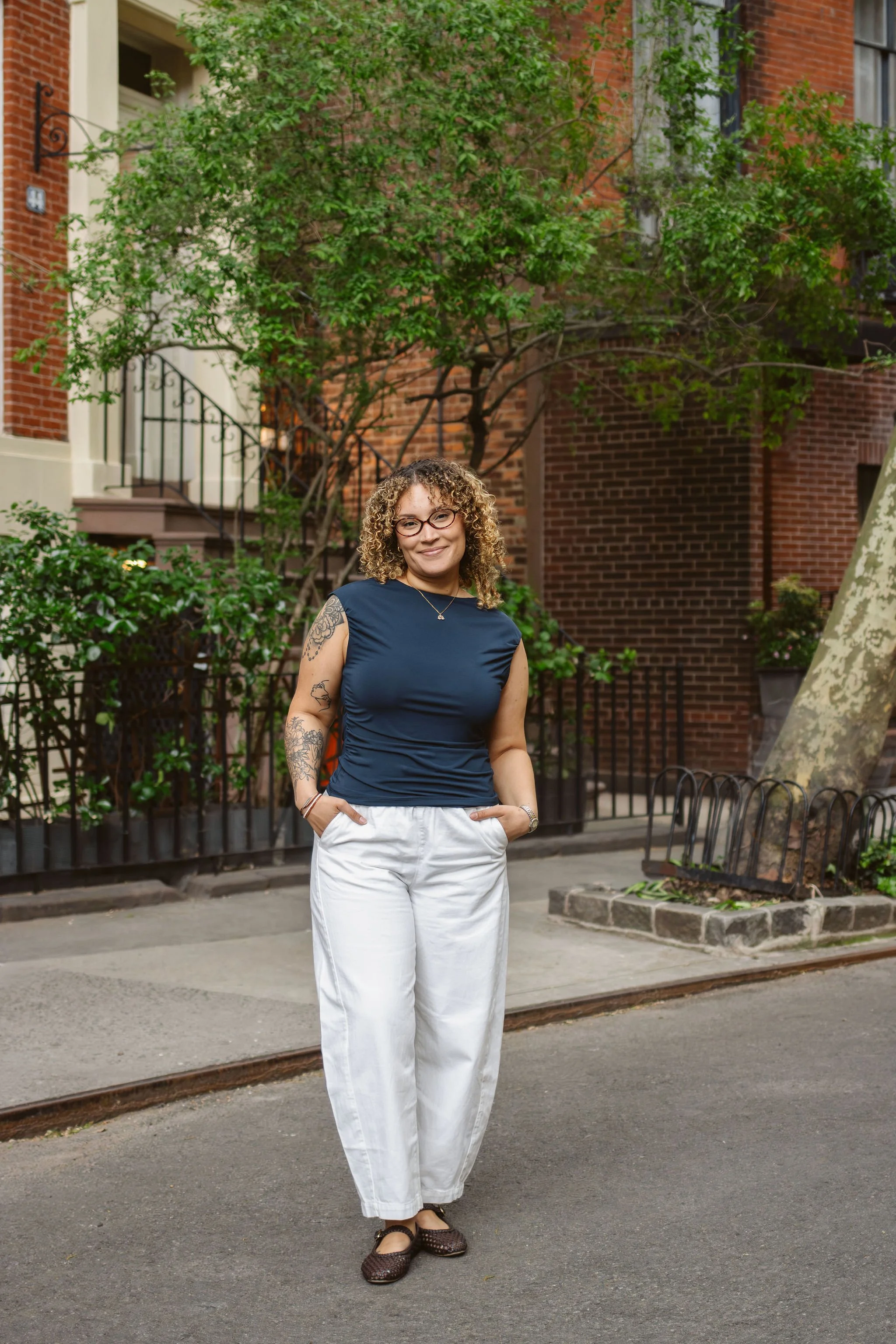
![A woman with curly blonde hair and glasses stands on a city sidewalk. She is wearing a navy blue top, white pants, and brown shoes, and has tattoos on her arms. Behind her are red brick buildings, greenery, and a tree.]()
Kiana Kohr, MHC-1
-
![A young woman with long light brown hair smiling, standing outdoors on a sidewalk with green plants and a brick building in the background. She is wearing a gray and white striped puff-sleeve blouse and black pants.]()
MJ Falcon Gimenez, LMHC
LICENSED THERAPIST
-
![A woman standing on a sidewalk in front of brick apartment buildings and trees, wearing a beige blazer and blue jeans, smiling at the camera.]()
Sophia Witheiler, LMHC
LICENSED THERAPIST
-
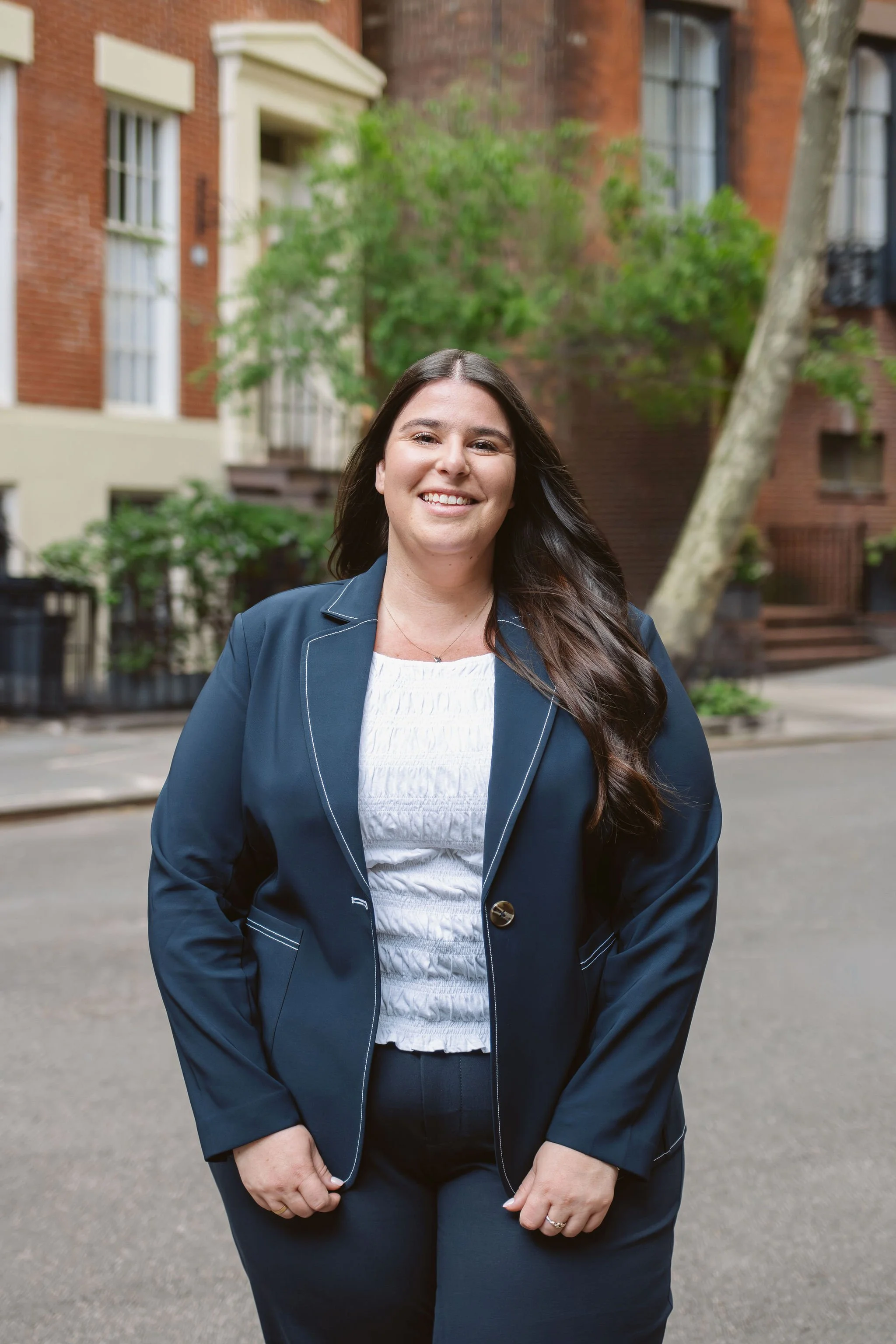
![Smiling woman wearing a navy blazer and white top standing on a city street with red brick buildings and green trees in the background.]()
Sam Mauser, LMSW
CLINICAL DIRECTOR
-
![A woman with shoulder-length blonde hair smiling, wearing a checked blazer and a white top, standing outdoors in front of green leafy plants and a brick wall.]()
Caroline Kirby, LMFT
CLINIAL SUPERVISOR
-
![A young woman with long brown hair and a bright smile, wearing a striped button-up shirt and blue jeans, standing on a city street with brick buildings, green trees, and a staircase in the background.]()
Brooke Thomas, MHC-LP
-
![A smiling blonde woman wearing a black dress with a fitted bodice and a pleated skirt, standing outdoors with her hands on her hips, in front of a brick building and green trees.]()
Lauren Larkin, LMHC
FOUNDER
Lauren is not currently accepting new therapy clients.





-
No. Couples therapy can be helpful while dating, considering commitment, engaged, married, or in a long-term partnership. Tell us about your relationship and what you're hoping to work on when you reach out.
-
Yes. You can come to work on a recurring disagreement, talk through a transition, or understand each other better while you still feel connected. In fact, it can often be helpful. to attend couples therapy before things feel very bad.
-
That gives us something to discuss early on. Each person will have space to express what they want, including uncertainty about the relationship. Your therapist can help clarify whether the work is a fit for both of you.
-
You can seek individual relationship therapy to talk about your experience and choices. Couples therapy involves both partners agreeing to participate.
-
Sometimes, with the client's and therapist's agreement, a partner can join an individual session to learn about recovery support. You can ask your individual therapist whether that would be helpful. Ongoing couples therapy is an option if you both want to work more broadly on your relationship.
-
If you're experiencing threats, intimidation, violence, or controlling behavior, tell us privately when you reach out. We'll discuss individual support and whether joint sessions would be safe and appropriate.
-
Yes. LEL offers virtual couples therapy. Let us know where each person will be located during sessions so we can confirm whether we're able to work with you.
Common Questions About Couples Therapy
There’s Something You Keep Trying to Say. Let’s Start There.
Maybe you know exactly which conversation you need help having. Maybe you both know something feels off and haven't been able to explain it. We can help you talk through what's happening and figure out what you want to work on together.
Virtual couples therapy for adults in New York.

You May Also Be Interested In:
More on Relationships and Communication
Explore our articles on recurring arguments, talking through difficult subjects, and supporting a partner in eating disorder recovery.


Repeating the same arguments with your partner can feel exhausting and confusing. This blog explains the vulnerability cycle—a pattern rooted in past wounds and survival strategies—and shows how understanding it can transform conflict into connection.