
Anxiety Therapy in NYC
You’ve finished work, answered the texts, and done the things you needed to do. Now you’d like your brain to notice that the day is over.
Maybe it’s already on tomorrow. Maybe it’s back in a conversation from this morning, looking for something you should have said differently. At LEL Therapy, we help adults work through anxiety that keeps interrupting the life they’re trying to live.
We offer virtual anxiety therapy throughout New York State.

Being good at getting things done can hide how much anxiety costs you.
People may rely on you because you’re thoughtful, prepared, and usually a few steps ahead. They might not see the time you spend checking, the sleep you lose, or how hard it is to make a decision without asking someone else what they think.
You may also feel pressure to be grateful. You have opportunities. You’ve worked hard. You know there are good things in your life. And you’re still having a hard time enjoying them.
We can start there. You don’t need to wait until anxiety affects your performance for it to get support.
Where Is Anxiety Showing Up For You?
-
Rest comes with a running commentary
You sit down and start thinking about what you could be getting done. An open afternoon can feel uncomfortable rather than welcome.
-
You keep reviewing the interaction
You wonder whether you sounded awkward, annoyed someone, or said too much. The conversation may be over for everyone else.
-
Mistakes feel personal
A correction at work or a forgotten task becomes evidence for a much bigger story about whether you’re capable or good enough.
-
Your attention is somewhere else
You’re at dinner, on a walk, or with someone you love, but your mind is busy preparing for a problem that hasn’t happened.
-
You’re avoiding things you want
You turn down an invitation, delay a project, or put off a conversation because starting feels too uncomfortable.
-
Everyday decisions feel high-stakes
You weigh every option, ask for another opinion, and still worry you’ll choose wrong. Even after making a decision, you find yourself wondering whether you should have done something else.
More Focused Anxiety Support at LEL Therapy
-

Perfectionism Therapy
For the standards that keep moving, the fear of making mistakes, and the feeling that anything short of your best barely counts.
-

Social Anxiety Therapy
For fear of judgment, dread before social situations, and the replay afterward. We can work on making participation feel more possible.
-

Anxiety Therapy for High Achievers
For adults who keep meeting goals while feeling increasingly exhausted or disconnected. We can talk about work pressure, burnout concerns, ambition, and what you want your life to include.

What Anxiety Therapy Can Involve
Anxiety can be shaped by many things, including temperament, stress, health, past experiences, and the demands of your current life. We won’t assume there’s one explanation.
We’ll notice what happens when you feel anxious and what you do next. Does checking help for a few minutes, then leave you wanting to check again? Does avoiding the conversation bring relief today but make tomorrow harder? Understanding that sequence can help us decide what to practice differently.
We’ll also look at the pressures around you. A demanding workplace, discrimination, caregiving, or financial stress can’t be reduced to a thought you need to change.

Practical help for the moment you’re in
We can work on responding to anxious thoughts, bringing your attention back to the present, and making decisions when certainty isn’t available. Your therapist may draw on CBT, mindfulness, and other approaches suited to your needs.
01
Understanding the expectations you carry
We’ll talk about where you learned what counts as success, what happens when you disappoint someone, and whether your rules for yourself leave room to be human.
02
Trying something different in every day life
Change might mean sending an email after a reasonable review, accepting an invitation, or expressing a preference without a long explanation. We’ll choose manageable steps together and talk about what you learn.
03
Making room for what matters to you
You may know what you’re supposed to want better than what you actually want. Therapy gives us room to examine that, including the parts of your life that keep getting postponed.
04
It’s exhausting to think through everything.
Replaying a conversation. Second-guessing a decision. Trying to relax while mentally planning tomorrow. You may be getting through your days, but you deserve support with how those days feel.
Hear from Lauren about anxiety therapy at LEL and get a feel for the therapists behind the practice.
Our Approach to Anxiety Therapy in NYC
We want to understand what anxiety looks like in your life: what keeps you up, what you avoid, and how much energy goes into things that seem easy for everyone else. We bring warmth, honesty, and practical tools into that conversation. Together, we’ll explore what’s behind your anxiety and find ways to respond that leave you with more room to live.
-
Relational Therapy
You might worry about disappointing your therapist, saying the wrong thing, or having nothing “important enough” to talk about. Those feelings are welcome here, too.
We’ll pay attention to how expectations and relationships shape your anxiety, including what comes up between us. Therapy gives you room to practice being honest, asking for support, and setting a boundary without having to get every word right.
-
Cognitive Behavioral Therapy (CBT)
An unanswered text becomes “They’re upset with me.” A small mistake becomes “I’m going to lose my job.” We can slow those moments down and look at how a thought turns into a conclusion.
With CBT, we’ll examine the connections between your thoughts, feelings, and actions. You’ll practice questioning anxious predictions and trying different responses, even when you can’t be completely certain how something will turn out.
-
Mindfulness Practices
You can spend an entire dinner thinking about tomorrow or replaying something you said last week. Mindfulness gives us a way to notice when that’s happening and practice coming back to what’s in front of you.
We’ll explore small, manageable ways to pay attention to the present. Your mind is allowed to wander. The practice is noticing and returning, without turning it into another thing you’re judging yourself for.
-
Somatic Awareness & Grounding
Sometimes you notice your clenched jaw, tight shoulders, or restless legs before you realize how anxious you feel. We’ll make space to understand those physical cues.
Depending on what feels helpful, we may explore grounding, gentle movement, or breathing practices. We’ll adjust these together, including when focusing on your breath or body makes you more uncomfortable. Your feedback matters.
-
Solution-Focused Therapy
We’ll get specific about where you want things to feel different. Maybe you want to send an email without rereading it ten times, get through a busy morning, or make a decision without asking everyone you know.
We’ll look at what already helps, notice when anxiety has less of a hold, and build on those moments. Together, we’ll choose realistic steps you can try between sessions and talk through what you learn.
-
Values-Based Work & Positive Psychology
It can be difficult to know what you want when you’re used to asking what you should do. We’ll explore what matters to you, what you enjoy, and which expectations you’re tired of trying to meet.
We’ll also pay attention to your strengths and the parts of your life that already feel meaningful. That can help you make choices about work, relationships, and rest with more consideration for your own needs.
When Anxiety, Food & Body Image Overlap
Maybe eating out means studying the menu hours beforehand, missing a workout leaves you anxious, or thoughts about your body make it hard to be present with other people. We can talk about those experiences alongside everything else you’re bringing to therapy.
LEL’s work with eating disorders and body image gives us room to explore how these concerns fit together. We’ll consider what support would be useful, including collaboration with other providers when needed.
Many of our clients are:
Feeling pressure to get everything right
Worrying about being judged in social situations
Struggling to rest without feeling guilty
Keeping up at work while feeling burned out
Overthinking conversations and everyday decisions
Navigating change without knowing what comes next
You might be the person everyone counts on and still spend much of your day doubting yourself. Getting things done doesn’t tell the whole story of how you’re feeling. You can bring the worry, exhaustion, and things you’re embarrassed to admit into therapy. We’ll take them seriously.
THERAPISTS WHO ARE HUMAN + HUMANS WHO ARE THERAPISTS
Meet Our NYC Anxiety Therapists
-
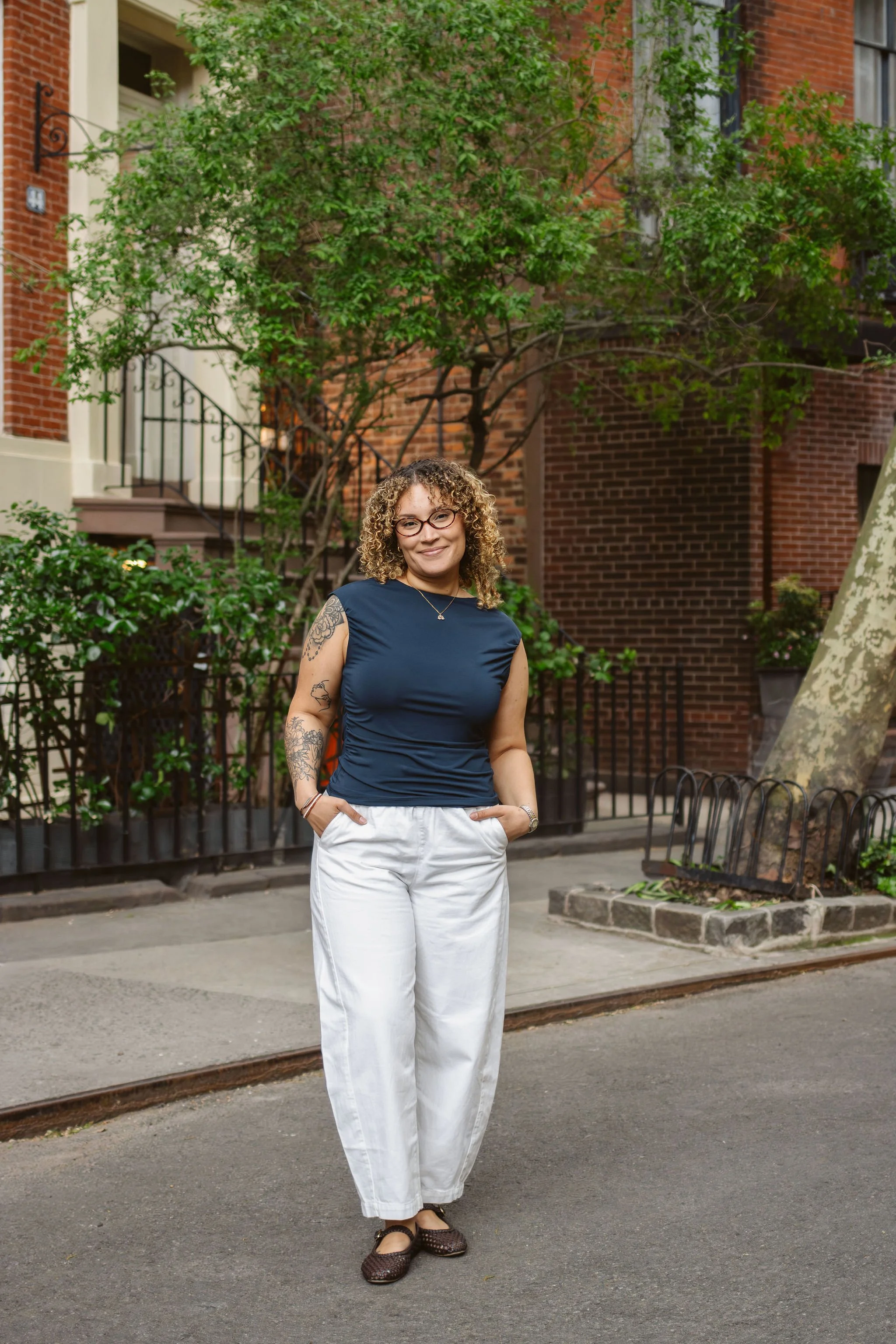
![A woman with curly hair, glasses, and tattoos on her arms is standing on a city street, smiling. She is wearing a navy blue sleeveless top, loose white pants, and brown woven shoes. The background features brick buildings, green trees, and a metal fence.]()
Kiana Kohr, MHC-1
-
![A woman standing on a city street with brick apartment buildings and trees behind her, smiling at the camera.]()
Sophia Witheiler, LMHC
LICENSED THERAPIST
-
![A young woman with long light brown hair, smiling, standing outdoors in front of a brick building with a small tree and green foliage.]()
MJ Falcon Gimenez, LMHC
LICENSED THERAPIST
-
![A smiling woman with shoulder-length blond hair wearing a black-and-white checkered blazer and gold jewelry standing in front of a lush green leafy background.]()
Caroline Kirby, LMFT
CLINIAL SUPERVISOR
-
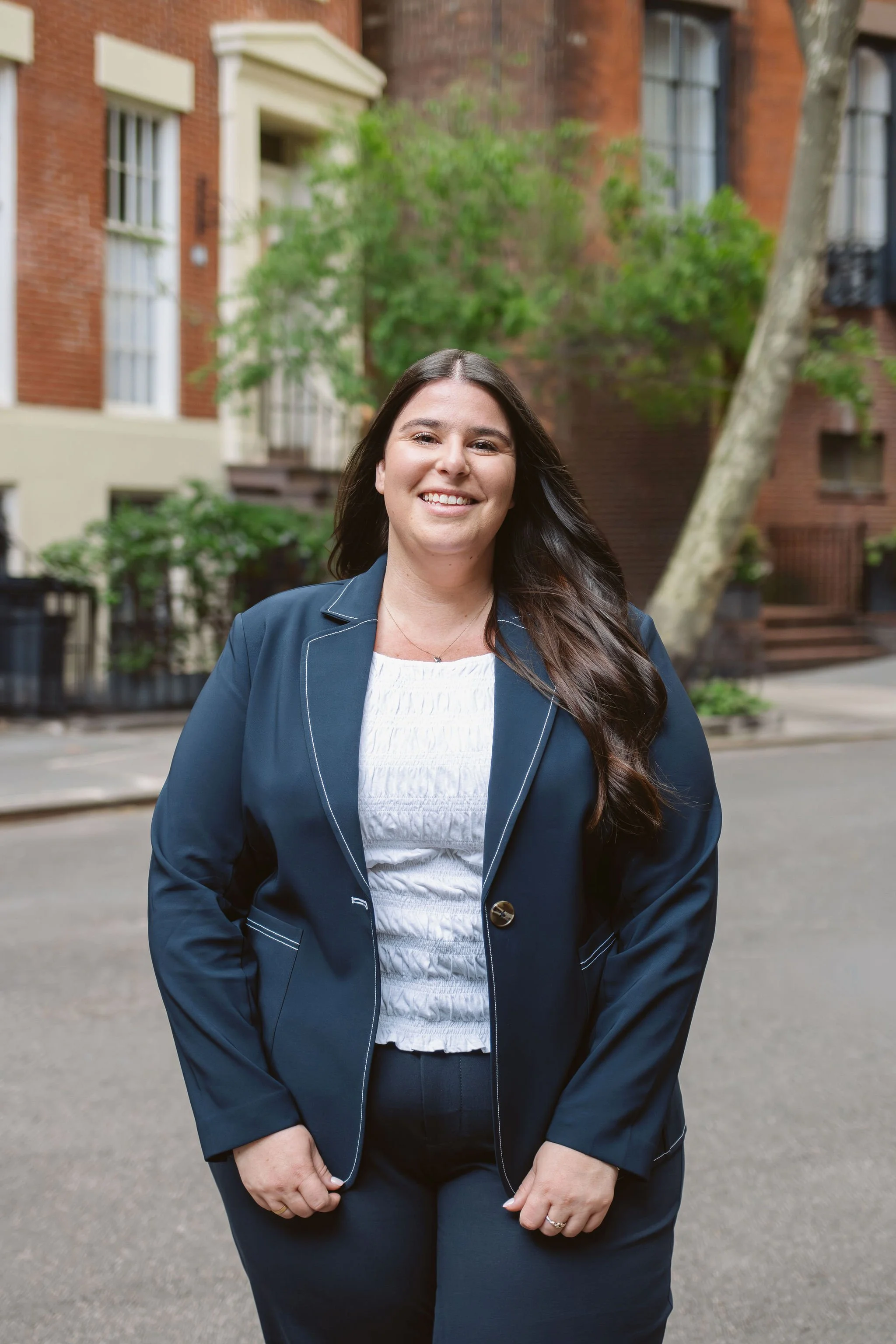
![A smiling woman with long dark hair standing on a city street with brick buildings and greenery in the background.]()
Sam Mauser, LMSW
CLINICAL DIRECTOR
-
![A young woman with shoulder-length brown hair smiling and standing on a city street, wearing a gray striped button-up shirt and blue jeans, with a brick apartment building and green trees in the background.]()
Brooke Thomas, MHC-LP
-
![A smiling woman with blonde wavy hair posing outdoors in front of a tree and a brick building, wearing a dark blue dress with spaghetti straps.]()
Lauren Larkin, LMHC
FOUNDER
Lauren is not currently accepting new therapy clients.





-
No. We can begin by discussing what you’re experiencing, how it affects your life, and what you’d like help with.
-
You can be performing well and struggling. We’ll pay attention to your experience outside of what other people can see or measure.
-
We can work with goals you care about while examining the pressure surrounding them. You get a say in what success means and what you’re willing to sacrifice for it.
-
Sometimes learning a different response involves discomfort. We’ll explain why we’re suggesting an activity and choose steps collaboratively. You’ll have room to ask questions and discuss the pace.
-
We can discuss whether connecting with a qualified prescriber would be useful alongside therapy. Medication decisions belong with you and that provider.
-
Yes. We offer virtual sessions for adults throughout New York State, including Manhattan, Brooklyn, Queens, the Bronx, Staten Island, and Long Island.
Questions about anxiety therapy in NYC?
You don’t need one more thing to be perfect at
Therapy can be somewhere to say how things actually feel. We. can start with the part that’s been hardest this week.

Related Services
We provide anxiety therapy for clients throughout:
Manhattan
Brooklyn
Staten Island
Upper East Side
Upper West Side
Chelsea
Williamsburg
Long Island
Queens
Bronx
Midtown
Tribeca
and virtually throughout New York State.





More on anxiety and everyday life
Read about self-compassion, all-or-nothing thinking, and the pressure to have everything figured out.
Psychotherapist Lindsay Mann explores OCD through a trauma-informed lens, explaining how compulsions may develop as attempts to create safety and control. She shares how combining evidence-based treatment with compassion can reduce shame and support recovery.